Re: Futures Of Logical Graphs • Themes and Variations
This post and the next wrap up the Themes and Variations section of my speculation on Futures of Logical Graphs. I made an effort to “show my work”, reviewing the steps I took to arrive at the present perspective on logical graphs, whistling past the least productive of the blind alleys, cul‑de‑sacs, detours, and forking paths I explored along the way. It can be useful to tell the story that way, partly because others may find things I missed down those roads, but it does call for a recap of the main ideas I would like readers to take away.
Partly through my reflection on Peirce’s use of operator variables I was led to what I called a “reflective extension of logical graphs”, amounting to a graphical formal language called the “cactus language” or “cactus syntax” after its principal graph-theoretic data structure.
The abstract syntax of cactus graphs can be interpreted for logical use in a couple of ways, both of which arise from generalizing the negation operator 


Two rules suffice for evaluating cactus graphs.
- The rule for evaluating a
-node operator, corresponding to an expression of the form
is as follows.
 -node operator, corresponding to an expression of the form
  is as follows.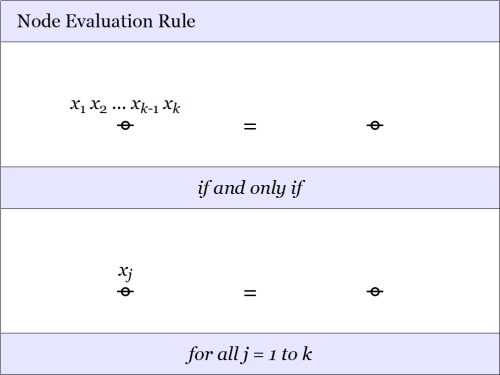
- The rule for evaluating a
-lobe operator, corresponding to an expression of the form
is as follows.
 is as follows.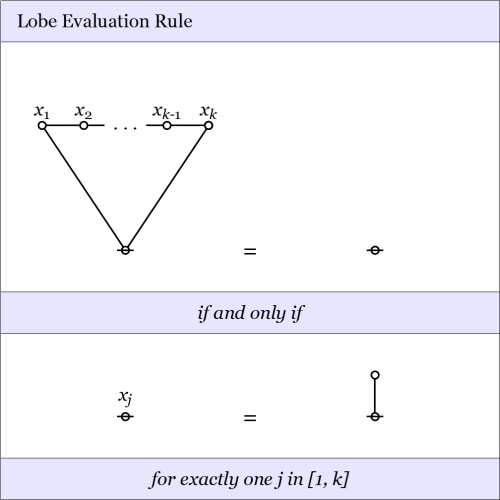
cc: FB | Logical Graphs • Laws of Form • Mathstodon • Academia.edu
cc: Conceptual Graphs • Cybernetics • Structural Modeling • Systems Science





/fit-in/580x348/filters:format(webp)/english-betterindia/media/media_files/2026/08/04/5-2026-08-04-18-31-45.png)

/pic9729642.png)